
Why International Payments Can Quietly Eat Into Your Profit
Because the invoice amount is not always the amount your business actually keeps.
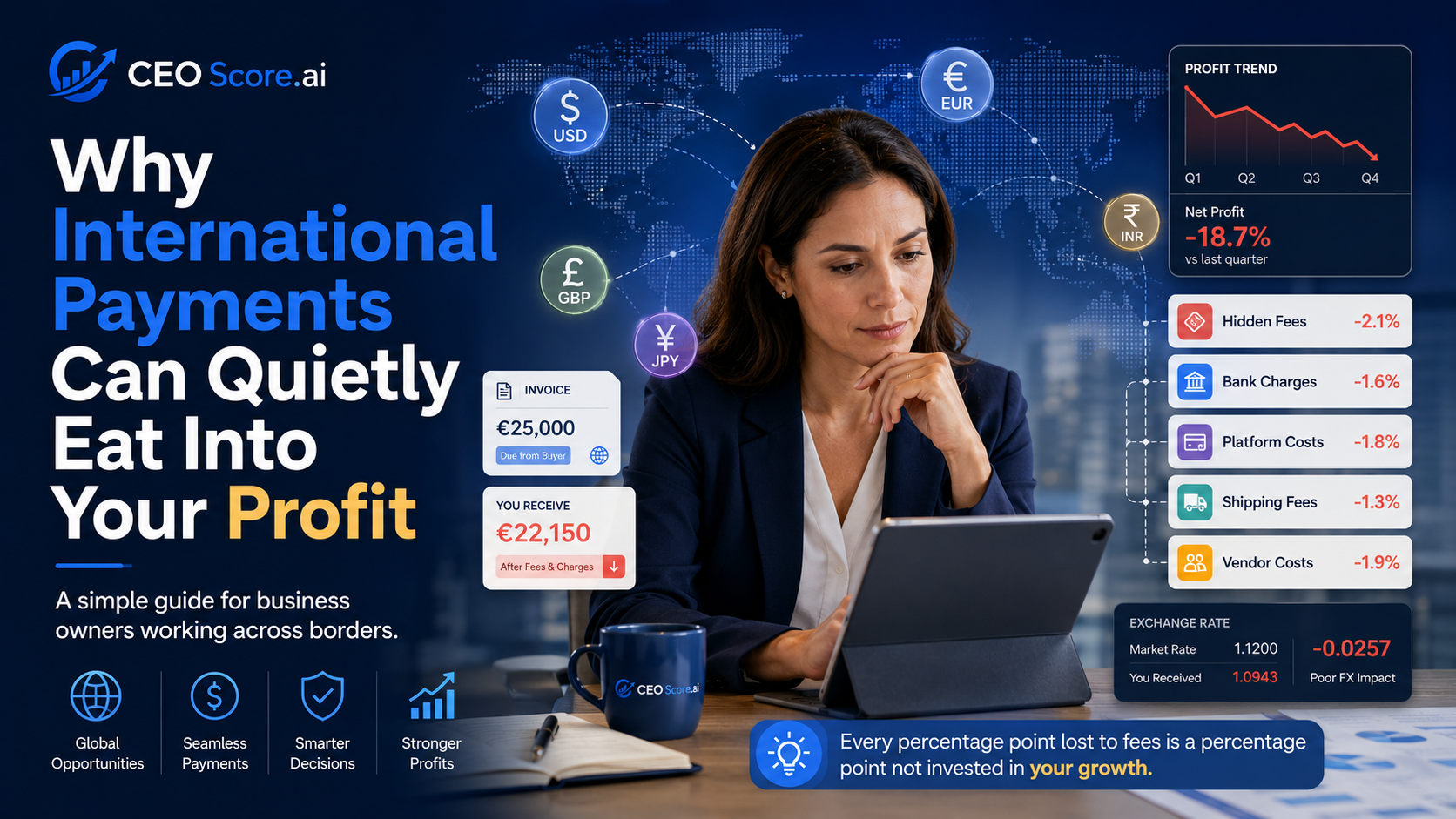
International business sounds exciting until the money starts doing acrobatics. One minute the price looks profitable, the next minute the exchange rate, platform fee, bank charge, and “small processing cost” have entered the chat like uninvited guests.
If you buy tools, hire freelancers, pay vendors, travel for business, or sell to customers in another country, the payment amount is only part of the story. The number that really matters is what your business keeps after the money finishes moving.
Coach note: global opportunities can be amazing. Just do not let a pretty invoice hide a messy margin.
The price you see is not always the profit you keep.
When money crosses currencies, your business is not only dealing with the amount listed on the invoice. It may also be dealing with the exchange rate used by the bank, the markup used by the platform, the processor fee, the transfer fee, and the extra costs attached to the project.
That does not mean international business is bad. It means your decision should be based on the final number, not the first number you see.
The sneaky costs that love hiding in international payments.
Exchange rate changes can shift the amount when money moves from one currency to another, especially when the payment clears later than expected. A price that looked fine on Monday may feel different by Friday if the rate changes or your payment app uses a different conversion.
Then come the fees. Banks, payment processors, marketplaces, cards, transfer apps, and platforms may add percentages, flat fees, or conversion markups. Separately, each one may look small. Together, they can turn into the business version of “where did my money go?”
Exchange rate shifts
The converted number can change depending on the rate your bank, card, app, or payment platform uses.
Platform and processor fees
Payment tools may take a percentage, a flat fee, or both before the money reaches your account.
Shipping and delivery costs
Products, supplies, samples, travel, or vendor work can come with extra charges that are easy to forget.
Profit margin pressure
The deal may still make money, but not enough to cover your time, risk, taxes, or future growth.
You may be making sales but keeping less than you think.
This is where international payments can get sneaky. A digital product sale looks profitable. A vendor quote looks reasonable. A freelancer seems affordable. A business trip feels like a smart investment. Then the fees, currency shifts, and extra costs come in, and the amount left is lower than expected.
The lesson is not “avoid international opportunities.” The lesson is: check the numbers before the decision becomes expensive.
Quick example
You charge a client $500 for a project. After currency conversion, platform fees, bank charges, and a few small costs you forgot to include, the amount you actually keep may be much lower than the headline price.
That difference matters when you are pricing services, hiring help, paying vendors, buying tools, or deciding whether a project is worth your time.
Use the Currency Converter before you pay, price, or invoice internationally.
The CEOscore Currency Converter helps you check exchange rates, fees, international costs, and money left after expenses. Use it before sending an invoice, buying from a vendor, paying a freelancer, pricing a digital product, or deciding if an international cost still leaves enough room to breathe.
The goal is not to turn you into a finance robot. The goal is to stop a small fee from quietly becoming the plot twist in your profit margin.
A simple checklist before international payments.
- Original amount: What is the listed price in the original currency?
- Converted amount: What does that become in your home currency?
- Exchange rate: Which rate will your bank, card, app, or platform use?
- Platform fees: What percentage or flat fee will be taken?
- Extra costs: Are there shipping, tax, travel, supplier, or delivery charges?
- Money left: After everything, what does the business actually keep?
- Margin check: Is there enough room for time, taxes, risk, and profit?
- Decision: Does the price need to change before you say yes?
Do not let the fees make the decision for you.
International business can create amazing opportunities, but it can also make the numbers harder to see. The fix is not fear. The fix is clarity.
Before you say yes to a vendor, invoice a client, book a business trip, hire across borders, or launch a global offer, pause and check the real cost. The clearer the number, the easier it is to protect your profit and make a confident decision.
Questions about international payments and profit
How can international payments reduce profit?
International payments can reduce profit through exchange rate changes, bank charges, payment platform fees, conversion markups, shipping costs, taxes, and extra vendor charges.
Should business owners check currency before paying vendors?
Yes. Checking the converted amount, fees, and extra costs can help business owners understand the real cost before paying a vendor or supplier.
Can a currency converter help with pricing?
Yes. A currency converter can help estimate international prices, costs, fees, and money left after expenses so you can make better pricing decisions.
What should I check before invoicing an international client?
Check the exchange rate, payment processor fee, transfer fee, platform cost, expected delivery cost, and the amount your business will actually keep after expenses.